You can do everything Walton County asks of you and still not be allowed to rent your own house.
That is the part most short-term rental checklists skip, and it is the part that actually decides whether an Inlet Beach purchase works as an investment. The state license, the county registration, the tax registrations: those are real requirements, and I will walk through them below. But they are also the same three steps every 30A guide already lists. The step nobody puts first is this one: Inlet Beach has no single homeowners association. It is a patchwork of separate neighborhoods, each with its own covenants, so the neighborhood paperwork for a specific address is worth reviewing alongside the county portal.
Two houses a few doors apart can answer the "can I rent this" question completely differently. One reason people find that out after closing instead of before.
The county says yes. Your neighborhood might say something else.
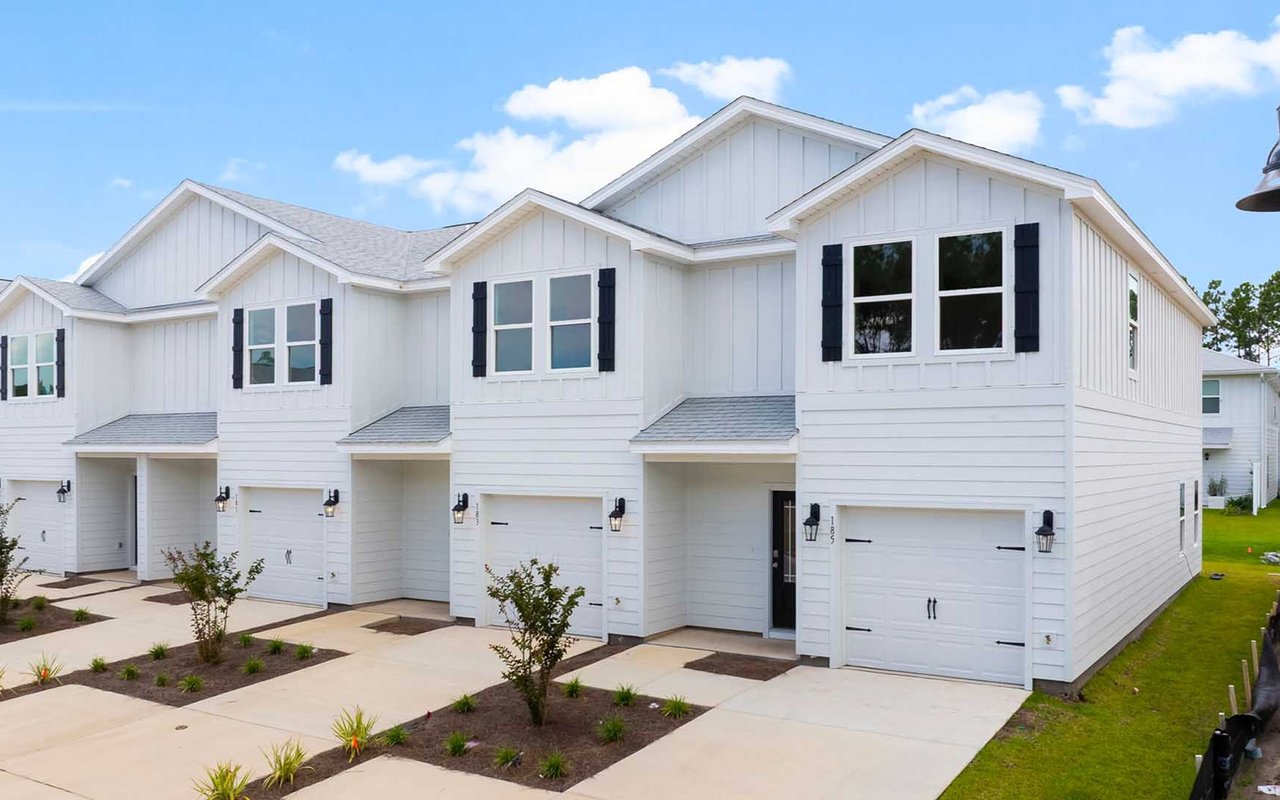
Unlike Rosemary Beach, where the Property Owners Association administers and enforces the community code governing architecture and the association's board sets parking rules listed in the community's rental agreement, Inlet Beach was never built as one master-planned neighborhood. It grew as a collection of smaller subdivisions, cottage rows, and newer infill developments, each incorporated on its own terms. Some of those neighborhoods welcome rentals with open arms. Others, like Watersound Origins just inland, restrict short-term rentals, according to the Watersound Origins HOA.
That means a Walton County Vacation Rental Certificate is one part of the rental paperwork. If you are buying with rental income in the pro forma, review the recorded declaration of covenants for that lot before relying on the state license number you will eventually post on your listing.
Jurisdiction is another detail to confirm: Inlet Beach straddles two counties. The eastern edge near Camp Helen State Park and Lake Powell falls under Bay County, while the bulk of the community, including most of what people mean when they say "Inlet Beach," sits in Walton County. Everything in this post applies to the Walton County side. If you are looking at a parcel near the county line, confirm the jurisdiction before you assume any of this applies.
What the county actually requires, and what just changed
Once you know your neighborhood allows the use, the state and county requirements are procedural but not optional. A Florida vacation rental license from the Department of Business and Professional Regulation is the baseline for any property rented more than three times a year for stays under 30 days. On top of that, Walton County requires its own annual registration under Ordinance 2023-03, plus registration with the Florida Department of Revenue for sales tax and with the Walton County Tax Collector for the Tourist Development Tax.
Here is what changed this year. On February 3, 2026, Walton County announced it was aligning its local registration renewal with the state DBPR licensing cycle. The shift already took effect: most properties in the county now renew both the state license and the county registration on the same date, June 1, with the application window opening April 1. If you owned a rental here in 2026, that first unified window already came and went. Going forward, it is the annual rhythm to plan around, and the practical upside is real: one renewal calendar instead of two.
The wrinkle: this unified schedule does not apply everywhere. Properties in ZIP code 32459, the Santa Rosa Beach area, stay on their prior cycle for now, expiring January 31. Inlet Beach's ZIP code is 32461, the same ZIP listed on the county's own code compliance docket for the South Wall Street case, which puts it on the June 1 schedule. If you are cross-referencing advice for a Santa Rosa Beach property or a guide that does not distinguish ZIP codes, confirm the applicable deadline for your parcel.
What it costs, in plain numbers
SoWal.co lists the fees and potential fines below.
| Item | Cost |
|---|---|
| Walton County registration, individual property | $300 per year |
| Walton County registration, property in a registered community | $227 per year |
| Change of managing agent | $125 |
| Change of local responsible party | $25 |
| Operating without a valid certificate | Up to $500 per day |
That last line is not theoretical. The county's own Code Compliance Hearing docket for February 25, 2026, held at the Freeport Commons BCC Boardroom, listed multiple pending cases under the Land Development Code's short-term vacation rental certificate requirements, including one tied to a property on South Wall Street in Inlet Beach. That is not a hypothetical risk you read about in an ordinance summary. It is a case number, a date, and a street in the neighborhood you may be about to buy into.
On top of the registration fee, plan for the tax stack. Every short-term rental in this part of Walton County collects Florida's 6 percent state sales tax plus the South Walton Tourist Development Tax of 5 percent, for a combined 11 percent on rent and most non-refundable fees like cleaning charges. Platforms like Airbnb often remit portions of this automatically, but the legal responsibility for accurate collection stays with the property owner, not the platform.
Occupancy limits and rental capacity
Walton County caps short-term rental occupancy at one person per 150 square feet of heated and cooled living area, or a lower number if the owner agrees to it in the certificate application. That formula matters more than it sounds like it should, because it directly caps your nightly rate potential. A 2,400 square foot home tops out around 16 guests under the formula, which sounds generous until you realize the bedroom count, not the square footage, usually drives what a renter will actually pay. If your rental math assumes packing in more sleeping arrangements than the square footage supports, the certificate process itself will correct that assumption before you ever list the property.
One more operational detail to check is Walton County's exterior-signage requirement.
What to actually ask for before you waive your inspection period
If you are under contract on an Inlet Beach property with rental income in the plan, the documents that matter most are not the county's, they are the neighborhood's. Before you go hard on your deposit, get these in writing:
- The recorded declaration of covenants for that specific subdivision, not a summary, and confirmation of whether short-term rental is expressly permitted, restricted to a minimum stay, or silent on the question entirely.
- Any HOA rental cap, approval process, or registration fee the association charges separately from the county.
- The seller's current DBPR license number and Walton County registration number, so you can verify both are active rather than assuming continuity transfers automatically at closing.
- Written confirmation of which ZIP code and which county the parcel sits in, especially for anything near the Bay County line.
None of this replaces your own attorney's review of title and covenants. It means you can bring those questions to the review before closing.
FAQ
What should I review about HOA rental rules? Review the recorded covenants for the specific subdivision before relying on the county certificate.
What if my Inlet Beach neighborhood doesn't have an HOA at all? Some smaller, older subdivisions in Inlet Beach were platted without a formal association. Confirm the absence of any recorded restrictions with a title search rather than assuming no HOA means no rules.
How long does it actually take to get a new rental legally operating after closing? Between the DBPR license, the county registration, and the tax account registrations, plan for several weeks of lead time before you can legally advertise the property, longer if your application requires corrections or if you are buying during a peak renewal season when the county portal sees higher volume.
If you are weighing an Inlet Beach purchase against the rental numbers on paper, I can walk you through what the covenants on a specific lot say before you write the offer, so you can take them into account. The Real Experts Group works Bay and Gulf County properties from Panama City Beach through Cape San Blas every day, and Inlet Beach's patchwork of neighborhood rules is exactly the kind of detail we check before a client gets attached to a number. Let's talk about your buying, selling, or investing goals.
This article is general information, not legal, tax or financial advice. Consult a qualified professional about your situation.